
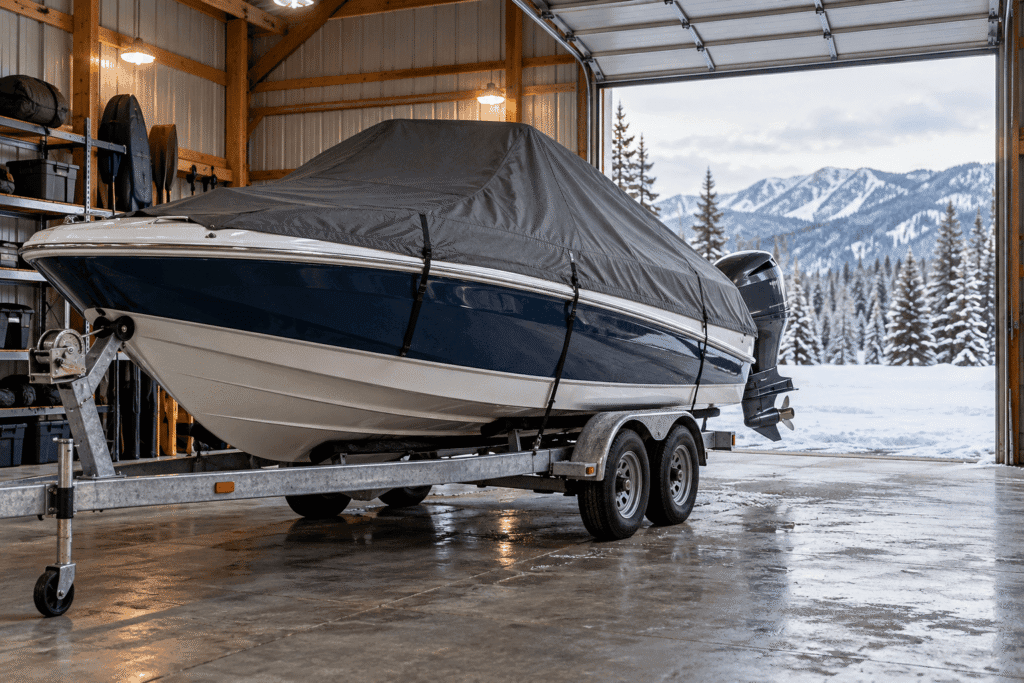
Putting your boat into storage may end your boating season, but it does not eliminate the possibility of damage or loss.
A stored boat can still be affected by theft, vandalism, fire, severe weather, falling objects, and other hazards. Whether your insurance applies depends on your policy, the type of coverage you selected, and whether you followed any storage or lay-up requirements.
Before storing your boat for the winter, review how your coverage works while the boat is out of the water and not being used.
Does Boat Insurance Continue While a Boat Is in Storage?
Many boat insurance policies provide some protection while the insured boat is stored. However, the extent of that protection varies.
Coverage may depend on:
- Whether the boat is stored indoors or outdoors
- Whether it remains in the water
- The address or type of storage facility
- How the boat is secured
- Whether the policy includes physical damage coverage
- Any seasonal or geographic restrictions
- Whether a lay-up period applies
- The cause of the damage
Do not assume that putting the boat away automatically suspends its insurance. Likewise, do not assume that every type of winter damage will be covered simply because the policy remains active.
Reviewing your boat insurance coverage before storage can help you understand which protections remain in effect and whether your insurer needs updated information.
What Can Happen to a Boat During Winter Storage?
A boat may be used less during the winter, but it is not free from risk.
Possible storage-related losses include:
- Theft of the boat, motor, trailer, or equipment
- Vandalism
- Fire
- Wind or hail damage
- Damage caused by snow or ice accumulation
- Falling trees, branches, or other objects
- Damage during transportation to or from storage
- Damage caused by animals or pests
- Water intrusion
Whether a particular loss is covered depends on the policy’s terms, limits, deductible, exclusions, and the circumstances surrounding the damage.
Physical damage coverage may address certain covered losses involving the boat itself. Equipment, personal property, and trailer coverage may be handled separately or subject to their own limits.
Should You Cancel Boat Insurance for the Winter?
Canceling a boat policy simply because the boat is not being used can create a significant coverage gap.
Without an active policy, you may have no coverage if the boat is stolen, vandalized, damaged by fire, or affected by a covered weather event during storage. Canceling could also create problems if the boat is financed or if a marina or storage facility requires proof of insurance.
A lapse in coverage may affect your insurance options or costs when you seek another policy. The financial consequences will depend on the carrier and your circumstances.
Before canceling or reducing coverage, ask your insurance agent what protection would be lost and whether another seasonal option is available.
What Is a Boat Insurance Lay-Up Period?
Some boat insurance policies include a lay-up period. This is a specified period during which the boat is expected to be out of use.
A lay-up provision may restrict the operation of the boat during certain dates. In exchange, the policy may account for the lower operating risk during that period. The boat may retain certain storage-related protection, but the exact terms vary by policy and carrier.
Questions to ask include:
- Does my policy have a defined lay-up period?
- Am I prohibited from operating the boat during that time?
- Does coverage change during the lay-up period?
- Are there requirements for winterization or storage?
- What happens if I use the boat before the lay-up period ends?
- Do I need to notify the insurer when the boat returns to the water?
Do not take the boat out during a restricted period without first confirming that coverage will apply.
Does the Storage Location Affect Coverage?
Where and how you store the boat may affect your coverage.
A policy may treat the following arrangements differently:
- Storage inside a secured building
- Outdoor storage at your home
- Storage at a marina or commercial facility
- Keeping the boat in the water
- Storing the boat in another state
- Transporting the boat to a seasonal storage location
Tell your insurance agent if the storage location has changed since the policy was issued. An insurer may need the address, type of facility, security arrangements, or information about whether the boat will remain on its trailer.
You should also review the storage agreement. A marina or storage facility may limit its responsibility for damage to your boat and may require you to maintain your own insurance.
Are the Boat Trailer and Equipment Covered?
Coverage for a boat does not always mean that every related item has the same protection.
Review whether your policy addresses:
- The boat trailer
- Permanently attached equipment
- Removable electronics
- Fishing equipment
- Safety gear
- Tools and maintenance supplies
- Personal belongings kept aboard the boat
Trailer coverage deserves particular attention. The trailer may face risks while stored and while transporting the boat.
The source of liability coverage can also change when a trailer is attached to a vehicle and being driven. Ask your agent how your boat policy and auto policy apply while the trailer is stored, connected to a vehicle, or on the road.
Remove valuable portable items when practical and store them in a secure location. Special limits or exclusions may apply to certain equipment and personal property.
Does Boat Insurance Cover Poor Winterization?
Insurance is not a substitute for maintenance or proper winterization.
Boat policies commonly contain exclusions or limitations involving wear and tear, gradual deterioration, corrosion, mechanical failure, freezing, or damage resulting from inadequate maintenance. The wording and application of these provisions vary.
If an engine block cracks because water was not properly drained, for example, the outcome may differ from damage caused by a sudden covered event.
Follow the boat manufacturer’s winterization instructions and keep records of professional services. Depending on the vessel, winter preparation may include:
- Draining water from appropriate systems
- Protecting the engine and fuel system
- Disconnecting or maintaining batteries
- Inspecting hoses and connections
- Cleaning and drying the interior
- Using an appropriate cover
- Supporting the cover to prevent snow or water accumulation
- Checking the boat periodically during storage
Professional winterization does not guarantee that every later loss will be covered, but it can reduce preventable damage and provide documentation of the work performed.
Review the Policy Limit and Valuation Method
Winter is also a useful time to confirm how the boat would be valued after a covered loss.
Boat policies may use different settlement methods, including agreed value or actual cash value. The distinction can affect how much the insurer may pay if the boat is damaged beyond repair or stolen.
Review:
- The boat’s current insured value
- The policy’s loss-settlement method
- Your deductible
- Separate deductibles for named events, if applicable
- Limits for equipment and personal property
- Coverage for the trailer
- Whether recent upgrades have been reported
Notify your agent if you added a new motor, navigation equipment, fishing equipment, or other substantial improvements during the season.
Questions to Ask Before Putting Your Boat Away
Before winter storage begins, ask your insurance agent:
- Does my coverage remain active throughout the winter?
- Which storage-related losses may be covered?
- Does my policy include a lay-up period?
- Are there restrictions on winter use?
- Does the insurer need my storage address?
- Are there security or winterization requirements?
- How is my trailer covered?
- Are boating equipment and personal belongings included?
- Would moving the boat to another state affect coverage?
- Do my lender or storage facility agreements require specific coverage?
- Should I update the boat’s insured value?
Keep your policy documents and your agent’s contact information somewhere accessible rather than leaving the only copies inside the stored boat.
Review Your Coverage Again Before Launching
Your insurance needs may change when boating season begins.
Before returning the boat to the water:
- Confirm that any lay-up restriction has ended
- Notify your carrier if required
- Verify that premiums are current
- Review navigation limits
- Check that new equipment has been added to the policy
- Confirm coverage for operators who may use the boat
- Inspect the boat and trailer
- Keep current insurance and registration documents available
If you plan to transport the boat to a different state or operate it outside your normal area, review the policy’s navigation territory before the trip.
Protect Your Boat During the Off-Season
Winter storage reduces the time your boat spends on the water, but it does not eliminate the potential for theft, fire, weather damage, or other losses.
The right coverage depends on your boat, storage arrangement, policy terms, and plans for the next boating season. Before changing or canceling a policy, confirm what protection would remain and whether a lay-up option is available.
Warrior Insurance and Services Group can help Colorado boat owners compare coverage from multiple carriers and review how a policy applies during winter storage. If you need to update an existing policy or compare options, request a boat insurance quote.
