
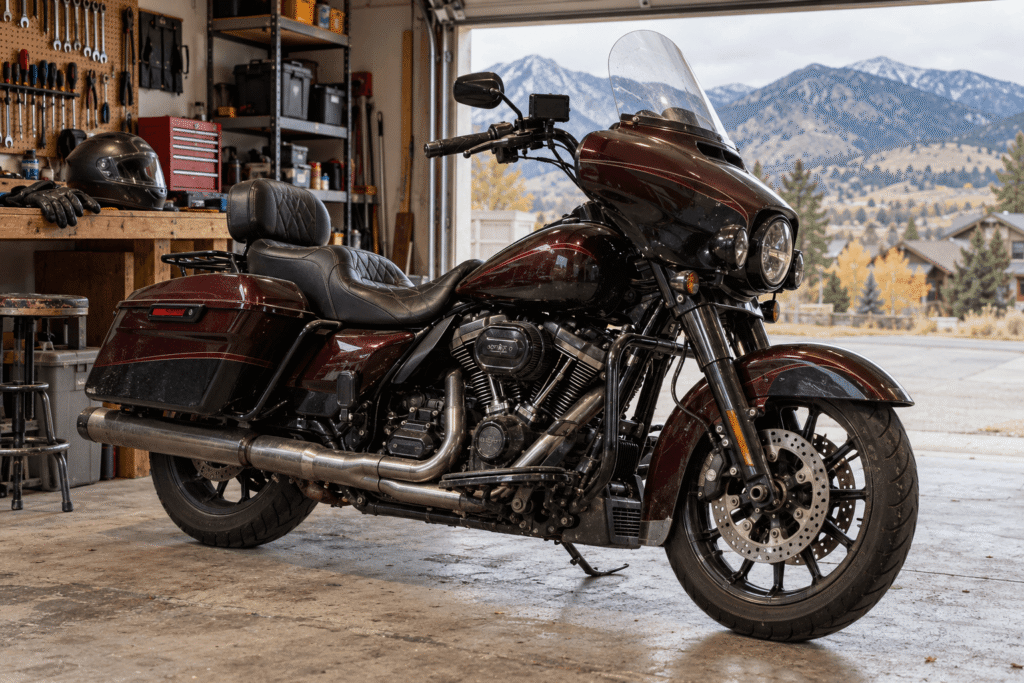
Customizing a motorcycle can improve its comfort, appearance, performance, or usefulness. Custom paint, upgraded suspension, specialty wheels, luggage, and electronics can also represent a substantial investment beyond the motorcycle’s original purchase price.
Standard motorcycle insurance does not necessarily provide unlimited protection for these additions. Whether an upgrade is covered—and how much may be available after a covered loss—depends on the policy, carrier, applicable coverage, and type of equipment.
If you have modified your motorcycle, reviewing its custom-parts coverage can help you determine whether your policy still reflects the bike you actually own.
What Counts as a Custom Part or Accessory?
Custom parts and accessories generally include equipment, enhancements, or modifications that were not originally installed by the motorcycle’s manufacturer.
Depending on the policy, examples may include:
- Custom paint, graphics, or chrome
- Upgraded seats
- Specialty wheels
- Aftermarket exhaust systems
- Suspension upgrades
- Saddlebags and other attached luggage
- Windshields and fairings
- Custom handlebars
- Permanently installed audio or communication equipment
- Sidecars or conversion equipment
- Other modifications affecting the motorcycle’s appearance or performance
The policy may distinguish between permanently attached equipment and personal belongings carried on the motorcycle. The terms “accessories,” “custom parts,” and “custom equipment” can also be defined differently by different carriers.
Does Standard Motorcycle Insurance Cover Custom Parts?
It may provide some protection, but coverage is not the same under every policy.
Liability insurance generally addresses covered injuries or property damage for which the rider is legally responsible. It does not ordinarily pay to repair the insured rider’s own motorcycle or replace its custom parts.
Protection for the motorcycle itself is generally connected to physical-damage coverage:
- Collision coverage may help repair or replace the motorcycle after a covered collision, subject to the deductible and policy terms.
- Comprehensive coverage may help with certain non-collision losses, such as theft, vandalism, fire, hail, or other covered events.
Custom parts and accessories may be subject to a separate limit within that coverage. Some carriers include a limited amount of custom-equipment protection when comprehensive or collision coverage is purchased. Others may offer additional protection through an endorsement or separate coverage option.
Warrior Insurance and Services Group’s motorcycle insurance options can help riders compare the coverages available through different carriers.
Why the Custom-Equipment Limit Matters
Imagine you purchase a motorcycle and later add custom paint, an upgraded seat, specialty wheels, saddlebags, and a new suspension system.
Even if your policy covers certain custom equipment, the applicable limit may be lower than the total amount you spent on those additions. Once the limit is reached, the remaining loss may not be covered.
The cost of an upgrade also does not necessarily increase the motorcycle’s claim value by the same amount. A rider who spends $8,000 on modifications should not assume the motorcycle will automatically be valued at $8,000 more after a total loss.
Claim valuation can depend on factors such as:
- The policy’s valuation provisions
- The motorcycle’s condition and market value
- The type and age of the modifications
- Depreciation provisions
- Documentation of the equipment
- The applicable custom-parts limit
- The deductible
- Other policy terms and exclusions
Ask how the carrier values custom equipment rather than relying only on the amount you paid for it.
What About Original and Aftermarket Parts?
Custom-parts coverage and original-equipment coverage are related but different considerations.
A custom-equipment provision may address modifications or additions that were not part of the motorcycle’s original factory configuration. An original equipment manufacturer endorsement may affect which type of replacement parts can be used during a covered repair.
A policy may permit aftermarket or comparable parts without guaranteeing replacement with parts made by the motorcycle’s original manufacturer. If the type of replacement part matters to you, ask how the policy handles both original equipment and custom components.
Are Riding Gear and Carried Belongings Covered?
Helmets, jackets, boots, gloves, phones, and other belongings are not necessarily treated the same as equipment permanently attached to the motorcycle.
Depending on the carrier and policy, some riding gear or carried contents may receive limited protection. Other items may be excluded, covered under a different provision, or subject to separate limits and deductibles.
Ask specifically about:
- Helmets and protective clothing
- Communication headsets
- Phones and navigation devices
- Tools and emergency equipment
- Items stored in saddlebags
- Detachable luggage
- Equipment used for work or business
Do not assume that coverage for an attached accessory also applies to everything carried on the motorcycle.
Could a Modification Affect Eligibility or Coverage?
Some modifications can affect more than the value of the bike. They may also change how a carrier evaluates the motorcycle or the risk of insuring it.
Performance modifications, major structural changes, conversion kits, or equipment that affects how the motorcycle is used may need to be disclosed. Certain carriers may limit or decline coverage for particular modifications.
Modifications should also comply with applicable safety and equipment requirements. Insurance coverage does not make an otherwise unlawful or unsafe modification permissible.
Tell your insurance agent about significant changes before assuming they are covered.
Document Your Motorcycle and Its Upgrades
Good records can help establish what equipment was installed and what it cost.
Consider keeping:
- Purchase receipts
- Installation invoices
- Dated photographs
- Manufacturer and model information
- Serial numbers, when available
- A current list of modifications
- Appraisals or valuations when appropriate
- Copies of coverage changes or endorsements
Store copies somewhere other than on the motorcycle. Update the records whenever you make a significant change.
Photographs should show both the motorcycle as a whole and the individual upgrades. Clear documentation does not guarantee coverage, but it can provide useful information if a covered loss occurs.
Review Your Policy After Making Changes
You do not have to wait until renewal to discuss a major modification with your insurance agent.
After upgrading your motorcycle, ask:
- Does my policy include comprehensive and collision coverage?
- Is custom-parts and equipment coverage included?
- What limit applies to custom equipment?
- Can I purchase a higher limit?
- Which modifications qualify under the policy?
- How would covered custom parts be valued?
- What deductible would apply?
- Are riding gear and carried belongings included?
- Could any modification affect my eligibility or premium?
- Do I need to provide receipts, photographs, or an appraisal?
Your declarations page can help identify your current coverages and limits, but the full policy contains the definitions, conditions, and exclusions that determine how coverage applies.
Warrior Insurance and Services Group’s guide to Colorado Motorcycle Insurance Requirements explains the coverage riders are required to carry.
Protect the Motorcycle You Actually Ride
A motorcycle can change considerably after it leaves the dealership. If your policy still describes the original motorcycle but does not adequately account for later upgrades, you may have less protection than you expect.
Custom-parts coverage may help protect eligible modifications, but the available amount and covered equipment vary among carriers and policies. Comprehensive coverage, collision coverage, custom-equipment limits, deductibles, valuation provisions, and documentation can all affect a claim.
Warrior Insurance and Services Group works with multiple insurance carriers and can help Colorado riders compare motorcycle insurance options. If you have customized your bike, discuss the modifications with an agent and review whether your current coverage fits the motorcycle you own today.
This article is for general educational purposes and is not a determination of coverage. Coverage, valuation, limits, deductibles, exclusions, and claim requirements vary by carrier and policy.
