
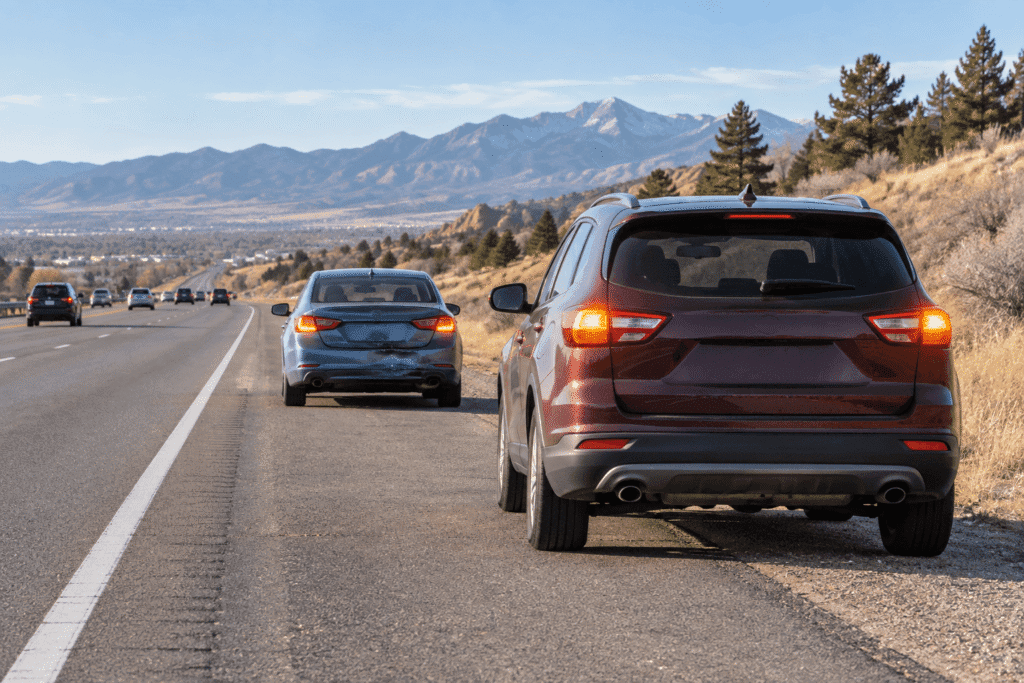
A car accident can become more complicated when the at-fault driver has no insurance or does not carry enough liability coverage to address the injuries they caused.
Your own auto policy may provide another source of protection. Uninsured and underinsured motorist coverage—often abbreviated as UM/UIM—is designed to address certain bodily injury damages caused by a driver who has no applicable insurance or insufficient insurance.
Understanding this coverage before an accident can help Colorado drivers make more informed decisions about their policy limits.
Uninsured and Underinsured Drivers Are Not the Same
An uninsured driver has no applicable bodily injury liability insurance. Depending on the policy and circumstances, the term may also apply when the insurer denies coverage or when an unidentified driver causes a hit-and-run accident.
An underinsured driver has bodily injury liability insurance, but the amount available is not enough to cover the bodily injury damages they caused.
For example, another driver may have a policy that pays $50,000 toward a covered bodily injury claim. If your total damages are greater than the amount available from that policy, you may be left with uncompensated damages.
Your own UM/UIM coverage may help address some of that remaining amount, subject to your limits, policy terms, and the circumstances of the claim.
How UM/UIM Coverage Works in Colorado
Colorado auto insurers generally must offer UM/UIM coverage in an amount equal to the bodily injury liability limits selected for the policy. The named insured may choose lower UM/UIM limits or reject the coverage in writing.
If the coverage has been rejected or reduced, that decision generally remains relevant when the policy is renewed or changed unless updated coverage is requested or another applicable requirement arises.
UM/UIM coverage may apply to bodily injury damages that an insured is legally entitled to recover from an uninsured or underinsured driver. Depending on the claim, those damages may involve:
- Medical expenses
- Lost income
- Reduced earning capacity
- Pain and suffering
- Other covered bodily injury damages
- Death caused by an uninsured or underinsured driver
Coverage is subject to the policy limits, exclusions, definitions, claim facts, and other terms.
Colorado Does Not Treat UIM as a Simple Limit-to-Limit Difference
Underinsured motorist coverage is sometimes explained as paying the difference between the other driver’s liability limit and your UM/UIM limit. That description can be misleading in Colorado.
Colorado generally does not allow available UM/UIM coverage to be reduced through a setoff for the at-fault driver’s liability insurance or certain other coverage. However, the combined recovery cannot exceed the damages the insured is legally entitled to recover, and the UM/UIM insurer does not pay more than the applicable policy limits.
Consider this simplified example:
- Your covered bodily injury damages total $100,000.
- The at-fault driver’s insurer pays $50,000.
- You have $50,000 in uncompensated damages.
- Your UM/UIM coverage may respond to some or all of that remaining amount.
The actual payment would depend on the available UM/UIM limit, the damages supported by the claim, the policy terms, and other relevant circumstances.
If the damages were higher, a larger amount of UM/UIM coverage might be available without being automatically reduced dollar for dollar by the at-fault driver’s liability limit. The coverage still would not permit recovery beyond the amount of the covered damages.
UM/UIM Coverage and Vehicle Damage
The UM/UIM coverage discussed here primarily addresses bodily injury or death. It should not automatically be expected to pay for damage to your vehicle.
Collision coverage may help pay for repairs to your vehicle after a covered accident, regardless of which driver caused it. A collision claim is generally subject to the deductible and other terms of the policy.
Other coverages may also become relevant depending on the loss. Reviewing your entire auto insurance policy can help you understand how bodily injury, vehicle damage, medical expenses, and liability are addressed separately.
What Happens If You Do Not Have UM/UIM Coverage?
If you rejected UM/UIM coverage or selected limits that are too low to address your damages, your available insurance protection may be limited.
You may still have options depending on the circumstances, including pursuing the at-fault driver personally. However, a driver who lacks sufficient insurance may also have limited assets available to satisfy a claim.
Other parts of your policy or separate insurance may address certain expenses, but they do not necessarily replace the protection provided by UM/UIM coverage.
This is why it is useful to review the coverage before an accident rather than waiting until a claim occurs.
What to Do After an Accident
If you are involved in an accident with a driver who may be uninsured or underinsured, take reasonable steps to document the event and protect your ability to make a claim.
Depending on the circumstances, these steps may include:
- Check for injuries and request emergency assistance. Seek medical care when needed.
- Report the accident. Contact law enforcement when appropriate and obtain information about the resulting report.
- Exchange information. Collect the other driver’s name, contact information, vehicle information, and available insurance details.
- Document the scene. Take photographs of the vehicles, visible damage, road conditions, and surrounding area when it is safe to do so.
- Identify witnesses. Obtain contact information from anyone who saw the accident.
- Notify your insurance carrier. Report the accident promptly and ask what information is required.
- Keep organized records. Save medical bills, repair estimates, wage information, correspondence, and other accident-related documentation.
- Review your policy. Confirm whether you have UM/UIM and collision coverage and what limits and deductibles apply.
Your insurance agent can help explain the coverage shown on your policy. The insurer or assigned claims representative will investigate and evaluate the specific claim.
Review Your Protection Before You Need It
You cannot control whether another driver maintains insurance or carries sufficient limits. You can review your own coverage and decide how much protection you want if another driver’s insurance falls short.
When reviewing a policy, consider asking:
- Do I currently have UM/UIM coverage?
- What are my UM/UIM limits?
- Are those limits equal to my bodily injury liability limits?
- Did I previously reject the coverage or select lower limits?
- How would the policy address a hit-and-run accident?
- Do I have collision coverage for vehicle damage?
- What deductibles apply?
- Which household members and vehicles are insured?
- Have my vehicles, drivers, commute, or financial circumstances changed?
The lowest available premium does not always provide the coverage or limits that best fit a household’s needs. Compare the cost of different options alongside the protection each one provides.
Build a More Complete Auto Insurance Plan
If another driver has no insurance or insufficient insurance, UM/UIM coverage may help address certain bodily injury damages that remain uncompensated. Whether coverage applies and how much may be paid depend on the damages, policy limits, policy language, and circumstances of the accident.
Collision coverage and other parts of an auto policy may address different losses, such as damage to the insured vehicle. Reviewing these coverages together can provide a clearer picture of how the policy may respond after an accident.
Warrior Insurance and Services Group helps drivers in Colorado Springs and throughout Colorado compare auto insurance options from multiple carriers. If you are unsure whether your current limits fit your needs, the Warrior team can help you review your policy and available options.
